
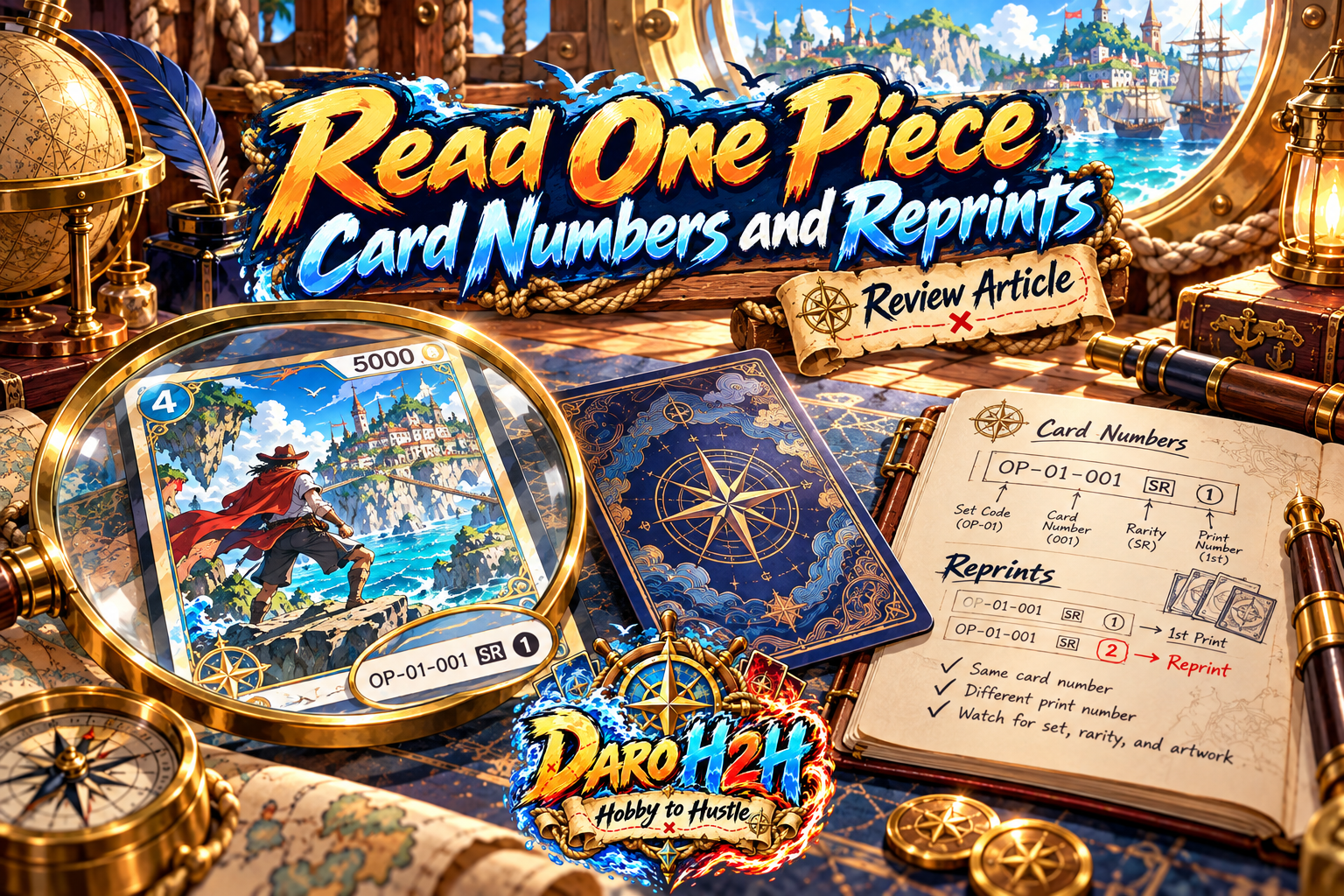
One Piece card numbers are useful enough that it’s tempting to let them do the whole job. Find the number, search it, buy the card. That works until two offers share a number but show different artwork, or a later product includes a printing you weren’t expecting.
For a collector, the number is the starting point. Keep the release, language, illustration, finish, and relevant marks with it so the record describes the physical version you mean.
Copy the complete card number

Use the full identifier, including its prefix and digits. For example, Bandai’s Romance Dawn card list includes Roronoa Zoro as OP01-001. Searching only “Zoro” or only “001” leaves far more room for the wrong result.
Then match the card name and official entry. A familiar character can appear on multiple cards, and a seller’s title can omit the details a collector needs. The exact identifier helps narrow the search without requiring you to memorize every release.
Be careful when recording product codes and card numbers. A product label such as OP-01 and a card number such as OP01-001 are related forms, but they aren’t the same field. Preserve what the official record says instead of improvising a new shorthand that becomes hard to search later.
The number and the collectible version answer different questions
Bandai’s Comprehensive Rules identify card number, rarity, block symbol, illustration, and illustrator as separate pieces of card information. Keeping them separate is useful for collecting too.
The official Romance Dawn list displays more than one entry and image for OP01-001 Roronoa Zoro. That is a concrete reason to inspect the artwork rather than assuming the identifier specifies only one appearance. If your goal is one particular illustration, put it in your wishlist and compare the actual offer’s photograph.
A player and a collector may care about different aspects of the same number. Deck-construction restrictions work from card identity under the rules, while a binder project can distinguish individual illustrations and treatments. Neither use makes the other detail disappear.

Reprints need release information
A later product can contain cards previously released elsewhere. For example, Bandai’s PRB-01 product page describes returning cards and new alternate illustrations. A prefix on an individual card therefore should not be your only evidence for which sealed product supplied the copy in front of you.
If you know the release, record it. If you only know what is visibly printed, keep the release uncertain until a matching official entry or reliable provenance resolves it. Don’t turn “this card originally appeared in that set” into “this particular copy came from that product.” Those statements need different evidence.
Likewise, don’t label every later copy “first print,” “reprint,” or “special edition” from a seller’s wording alone. Use the most specific description you can support: the card number, verified release or product, language, and observed variant details.
Record block information without guessing legality

When a block mark is present, note what appears on the card. Bandai’s block-number explanation includes updates and exceptions tied to card numbers and reprints. That makes a block observation useful, but it doesn’t make an isolated symbol a complete event-eligibility check.
For a collection record, you can preserve the visible mark and a link to the official reference. For an event, use the current rules, block updates, restrictions, and organizer guidance. Don’t erase the physical printing detail because a gameplay update affects how that card number is treated.
A record that another collector can understand
A useful entry includes the complete card number, name, language, verified product or release, rarity, and a clear artwork or variant description. Add the illustrator and block observation where they help. Keep condition in its own note so “different version” doesn’t become confused with “different amount of wear.”
If you’re discussing a trade, send a clear view of the actual card alongside the identifying details. If you’re buying online and the photograph doesn’t establish the version, ask. Two people agreeing on the number can still be imagining different cards.
For a personal favorites binder, you don’t need an elaborate catalog. You do need enough information to avoid accidentally buying the wrong artwork a second time. A short record with honest uncertainty beats a complicated one built on guesses.

Quick questions
Does the same card number mean identical collectibles?
No. Check artwork, treatment, language, and relevant release details as well as the number.
Does an OP prefix prove which pack this copy came from?
Not by itself. Returning cards can appear in later products. Distinguish the card’s identifier from the particular copy’s release history.
Should I use a collector nickname in my records?
You can keep it as a useful note. Preserve the official identifier and verified version information underneath it so the record still makes sense to somebody using different shorthand.