
Maybe you’re here because you saw a card with artwork that was too good to ignore. Maybe you’ve got a binder from years ago, a stack of recent pulls, or a few duplicates you wouldn’t mind trading. Whatever brought you in, you don’t need to know every set, rarity, grading term, or marketplace rule to enjoy collecting.
Daro H2H is built around a pretty simple idea: collect the cards you actually like, figure out how to take care of them, and learn the buying, trading, and selling stuff as you need it. The hobby is the fun part. The hustle part is optional.
You also don’t have to work through this site like a class. Start with what’s happening in your collection right now. Here are a few places to begin.
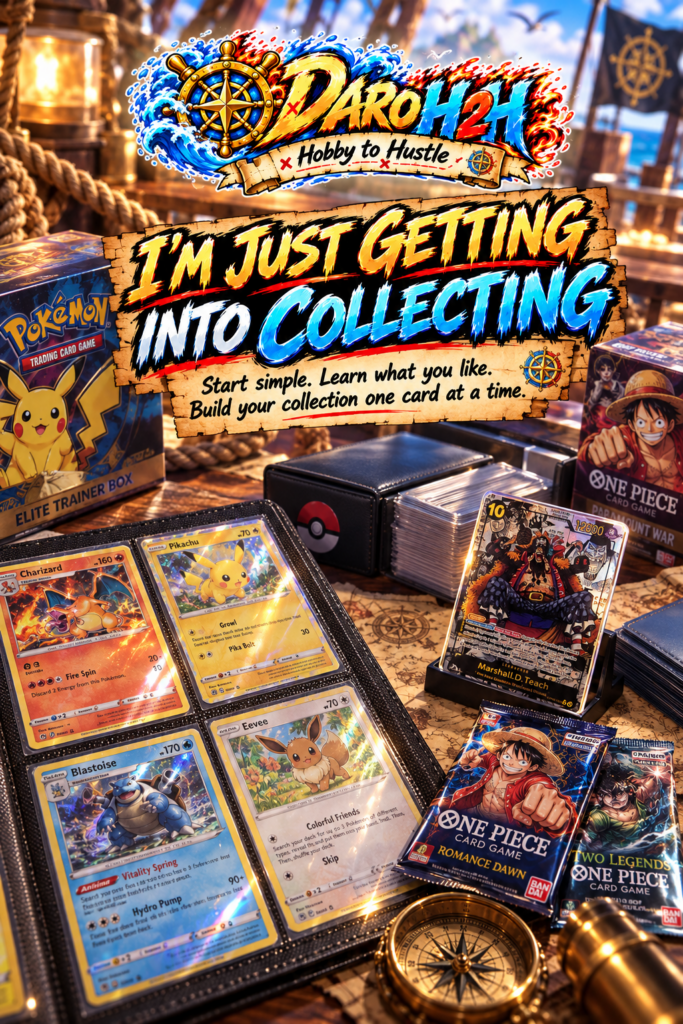
I’m just getting into collecting
First question: what made you want to collect in the first place? A favorite Pokémon? One Piece characters? A particular style of artwork? Something you remember from when you were younger? That answer is worth more than a random list of the most expensive cards in a set.
It’s easy to get distracted when a new release drops and everyone’s showing off their pulls. But you don’t have to chase a full set or spend a ton of money to have a collection you’re proud of. One binder page of cards you genuinely love is a solid start.
The first full guide I’d read is Choose a Collection You’ll Enjoy Keeping. It walks through picking a collecting lane, handling hype, thinking about packs versus singles, and setting a goal that doesn’t turn every cool card into another urgent purchase.
I’ve got cards, but the collection is getting messy
You know the situation: a few nice cards in a binder, some sleeved pulls on a shelf, duplicates in a box, and a random pile you keep meaning to sort. Nothing’s necessarily wrong with owning cards that way, but it gets old when you can’t find the one you’re looking for.
Start small. Separate the cards you want to keep from extras you’re still deciding on. Check what each card actually is before labeling it, especially when the same character has multiple printings or treatments. Then give your favorites a storage spot that fits the cards and the sleeves you’re using.
You don’t need fancy inventory software just to know where your cards are. A simple list or binder index can do the job while you figure out what level of tracking is worth the effort. More detailed organization and storage guides are being finished for this section.
I’m thinking about buying or trading
Finding the card you want is the exciting bit. Making sure it’s the right version, in the condition you expect, for terms you’re comfortable with? That’s where slowing down pays off.
Before a purchase or trade, get specific about the card, printing, language, and condition. Look at the actual listing photos and description rather than assuming every copy with the same character name is identical. A trade can feel like a win for both collectors without somebody inventing a perfect fairness score.
And if you aren’t sure about a listing, seller, or offer, waiting is a perfectly reasonable move. There will always be another card to look at. We’re building more detailed buying and trading guides that take those decisions one at a time.
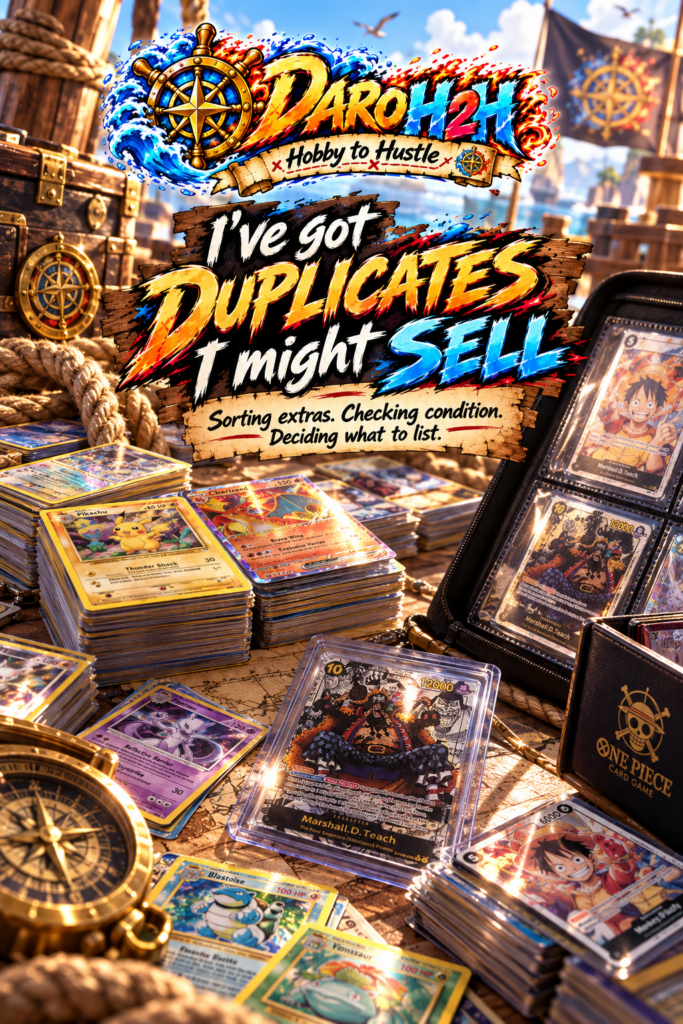
I’ve got duplicates I might sell
Selling a few cards can help pay for the next pickup, clear some binder space, or get cards into somebody else’s collection. Cool. That doesn’t mean you need to become a dealer, open a store, or treat every duplicate like inventory.
Start by asking how much work you’re willing to do. A shop offer, an individual listing, and a small lot can be very different experiences. What you actually keep from a sale depends on fees, packaging, shipping, and the time involved—not just the number on the listing.
If a sale isn’t worth the hassle, keeping the card, trading it, or giving it to a friend are all valid choices. The selling guides and calculators are being prepared to help you compare those routes without pretending there’s one guaranteed answer.
Pokémon, One Piece, and whatever comes next
Pokémon and One Piece are the first two card systems we’re covering in detail. Some collecting advice carries over: know what you own, protect it, and spend within your limits. But card numbering, finishes, rarity labels, dimensions, and game-specific terms aren’t interchangeable. When those details matter, we’ll explain the actual system instead of guessing.
This is a collecting site, not a promise that every card game works the same way. The goal is to make the guides useful even when your collection grows into something different.
So where should you start today?
If you’re still figuring out what you want to collect, go with the collection-goals guide. If you’re just browsing, check out the latest published articles; that library will grow as more guides pass review. And if you’re wondering who’s behind the site and how the advice gets put together, the About page explains it.
Take the next step that actually helps your collection. No homework, no pressure to buy anything, and definitely no rule that says a hobby has to become a side hustle.