
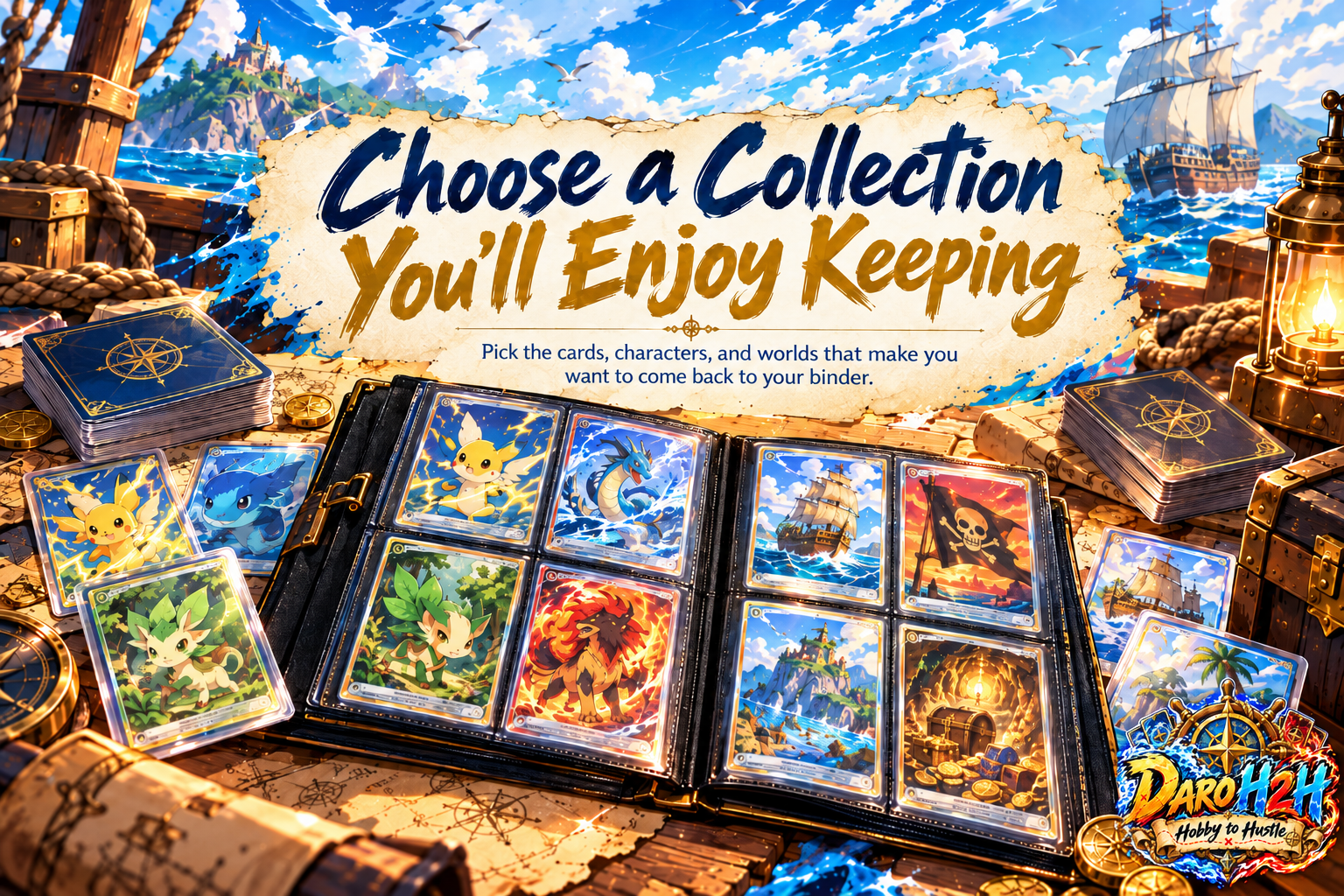
You know that feeling when you see a card and immediately think, yeah, that belongs in my collection? Maybe it’s the artwork, maybe it’s a character you’ve liked forever, or maybe the card just looks ridiculously good. You don’t need a price chart to explain it. You want the card because you want the card.
The tricky part comes later. A new set drops. Somebody posts a wild pull. You start looking up one card, find six more that you like, and suddenly your wishlist is getting bigger than your actual binder. It’s pretty easy to go from collecting things you love to chasing things you barely thought about a week ago.
None of that means you’re collecting wrong. Opening packs, hunting for a favorite card, and getting excited about a new release are all part of the fun. But if you’re trying to build a collection you’ll still enjoy down the road, it helps to figure out what your collection is actually about. Not what somebody online says you should own. What you want to pull out of the binder and look at.
Start with the cards that make you stop scrolling
Forget the price for a minute. Imagine you’ve got a stack of cards on the table, and somebody tells you that you can only keep a few for your personal collection. Which ones are you reaching for first?
Maybe you go straight for a favorite Pokémon, even if its card isn’t especially rare. Maybe you like One Piece because of the characters and stories, so certain scenes or members of a crew mean more to you than whatever’s getting attention this week. Maybe the character doesn’t even matter that much—you just love a particular artist’s style. That’s a totally legit way to collect.
It’s also fine if your answer is a little random. Some people want a binder that tells a story. Others want a page of cards that simply look awesome together. Maybe you’re into old-school designs, shiny finishes, promos, or the weird stuff nobody else seems to talk about. You don’t have to come up with an impressive reason for liking something.
That’s probably the easiest place to start: notice what you already get excited about. If you keep going back to look at the same artwork, that’s useful information. If you keep passing over a popular card because it does nothing for you, that’s useful information too. A card being somebody else’s grail doesn’t make it yours.
Pick a collecting lane you can actually explain
“I collect Pokémon” or “I collect One Piece” works as a general answer, but it leaves a lot of room for your budget to disappear. Both are huge interests. Even a narrower idea like collecting one character can turn into a massive project if you decide you need every printing, promo, language, and variation.
You don’t need a complicated spreadsheet on day one. Just give your current goal a little shape. Think of it as choosing a lane, not making a lifetime commitment.
For example, say you’re into one character’s artwork. You could decide to collect the five versions you like best instead of every version that exists. Or maybe you want one nine-pocket binder page that looks great when it’s finished. If you like collecting around a story, you might put together a small group of cards representing a crew, team, or arc. And if you’re a set collector, maybe your first goal is the regular numbered set—not every extra promo and parallel ever released.
Those are examples, not universal rules. The point is that each has a stopping point you can recognize. “I’m building a page of my favorite cards from this character” is something you can shop and trade toward. “I’m buying whatever looks cool whenever I see it” can also be fun, but it’s a different kind of hobby—and it helps to know which one you’re doing.
You can have more than one lane, by the way. A Pokémon favorites binder and a separate One Piece character collection don’t need the same rules. Just try not to treat every new interest like an emergency that needs a purchase today.
Collecting something and completing something aren’t the same thing
Set collecting scratches a particular itch. Checking off missing cards, watching the empty spots fill up, and finally finishing a page can feel great. If that’s what you enjoy, go for it.
The catch is that “complete” can mean a bunch of different things. Do you mean the regular numbered set? Every alternate treatment? Promos? Different languages? Graded versions? Two people can say they’re working on the same set and be aiming for completely different finish lines.
There’s no need to make one definition the official answer for your own binder. Decide what counts for your goal and write it down. If a special version shows up later, you can decide whether it’s a fun bonus or a whole new chase. It doesn’t have to retroactively make your finished collection unfinished.
And don’t sleep on smaller collections. A carefully chosen dozen cards can be more satisfying to look through than a huge stack of stuff you bought out of obligation. The number of cards isn’t what makes the collection yours. The choices are.
Don’t let the hype build your wishlist for you
Part of the fun of cards is seeing what other collectors are into. A great pull video can introduce you to artwork you never noticed. Somebody else’s binder can give you ideas. A new release can absolutely get you excited.
The problem starts when excitement turns into pressure. You see a card everywhere, so you feel like you should want it. Somebody calls it a must-have, and somehow that becomes your problem to solve. Before long, you’re spending money to keep up with a conversation instead of building the collection you actually like.
Try giving new wants a little breathing room. Add the card to a wishlist with the exact version you’re considering, then check back later. If you still want it after the initial buzz settles, great. If you forgot about it after a couple of days, that’s probably money you can put toward something you care about more.
This is also where packs versus singles becomes a real choice. Ripping packs is fun when you enjoy the surprise and understand you might not pull what you’re looking for. But if your goal is one specific card, opening more and more packs doesn’t guarantee it’ll show up. Sometimes the straightforward move is buying the single you actually want. Other times the fun of opening packs is what you wanted to spend your money on. Just be clear with yourself about which experience you’re paying for.
One more thing: a card being expensive doesn’t automatically make it cooler, and a cheaper favorite doesn’t become less interesting because nobody is hyping it. You’re allowed to love the card that costs lunch money more than the one somebody is treating like a retirement plan.
Your favorite cards and your extras can be different collections
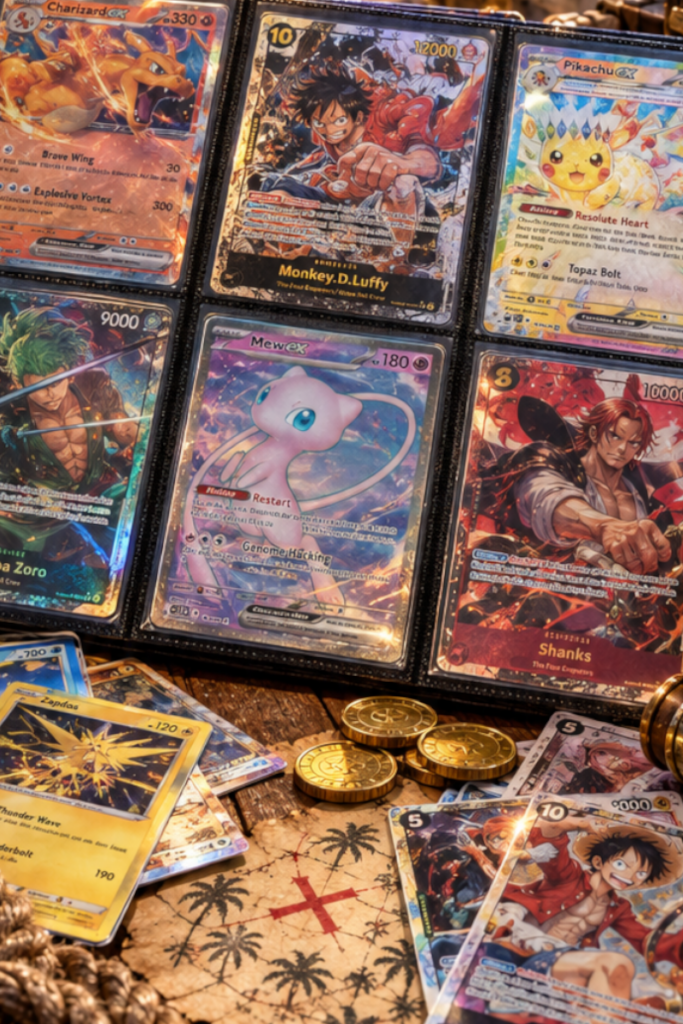
Picture a binder with a few pages you’re genuinely proud of. Now picture the box next to it: random pulls, duplicates, trade cards, gifts, some older purchases, and that one card you’re still not sure what to do with. Most of those extras don’t need to be part of your main collecting goal.
That’s worth separating in your head. Your collection is what you’ve chosen to keep because it matters to you. Everything you own is a bigger pile, and it can include cards you’re happy to trade, sell, gift, or hang onto for later. You can keep something just because you like it. You can also decide a card no longer fits and trade it toward one you’ll enjoy more.
For duplicates, a simple keep / trade / sell / gift / undecided note is enough to start. Undecided is useful. You don’t have to list a card for sale the second you realize you own two copies. Sometimes keeping the extra as a play copy or passing it to a friend makes more sense than doing all the work of selling it.
That fits the whole Hobby to Hustle idea: the money side should help you enjoy the hobby, not take over every decision. If selling an extra funds a card you’ve been chasing, nice. If the hassle isn’t worth it, you’re allowed to pass.
Make room for the budget you actually have
It’s easy to make an incredible wishlist when you’re not the one paying for it yet. It’s less fun when every card on the list comes with a price tag and three other things you’d like to spend money on.
Give the hobby a spending limit that works with your real life. It might be a set amount each month, money you’ve specifically saved for a card, or a rule that you wait before making bigger purchases. The exact number isn’t the important part. Having a number or boundary before you get tempted is what helps.
Then make a simple distinction between want soon, want someday, and just looks cool. That last category is underrated. It’s perfectly fine to admire a card without needing to own it. Otherwise every cool thing you see becomes another purchase competing for the same money.
And you don’t have to make every purchase look financially smart. If you can comfortably afford a card because you like the artwork, that’s a good enough reason to want it. Just don’t confuse loving a card with assuming its resale value will bail out a purchase you couldn’t really afford.
Use references to find the version you mean
Once you know which card you want, make sure you’re looking at the right one. The same character can appear across different sets, artwork, languages, and printings. A quick search result doesn’t always tell you which version you’re seeing.
For Pokémon, the official TCG card database is a useful starting point for exploring cards and narrowing searches by details such as expansion, rarity, and illustrator. When you’re building a wishlist, write down enough identifying information to recognize the specific version you want. If you’re not sure yet, say so instead of guessing.
Treat those databases like maps, not shopping assignments. Their job is to help you understand what’s out there. You still decide which cards are worth chasing.
Give yourself a chance to change your mind
What you’re into now might not be what you’re into six months from now. Maybe a set-completion project starts feeling like homework. Maybe you discover an illustrator whose cards you love. Maybe you finish a binder page and realize you’re happier building little collections than chasing one massive checklist.
That’s not failing at collecting. That’s learning what you like. You’re allowed to stop a goal halfway through, change its rules, or put it on the back burner. You don’t have to buy something this week just to prove you’re still into the hobby.
Every so often, flip through what you’ve got and ask which pages you’re excited to show someone. What’s missing that would make those pages better? What’s just taking up space because you thought you were supposed to own it? You don’t have to dump the extras immediately. Just notice what still feels fun.
Try a five-minute collection plan
If you want a starting point without overthinking it, write one sentence. Seriously, one is enough:
“I’m collecting __________ because __________, and for now I’m stopping at __________.”
For example: “I’m collecting a binder page of my favorite One Piece character artwork because I love those designs, and I’m stopping when the page is full.” Or: “I’m collecting ten Pokémon cards by an artist I like, and I’m choosing the art I actually want instead of checking every possible release.” These are made-up examples, but the method works the same for whatever you’re into.
Then jot down three cards you’d be happy to find, one thing you’re not chasing right now, and what you’re comfortable spending. That’s plenty to get started. You can make the wishlist more detailed once you know the exact cards you want.
Quick questions
Do I have to complete a full set?
Not unless that’s the goal you enjoy. A favorite-character binder, an art-focused page, or a handful of cards with a story behind your choices can be a great collection.
Is it wrong to care about resale value?
No. Value matters when you’re comparing purchases, planning a trade, or deciding whether to sell duplicates. Just don’t let a future selling price be the only reason you keep a card that’s supposed to make you happy.
Can I collect Pokémon and One Piece at the same time?
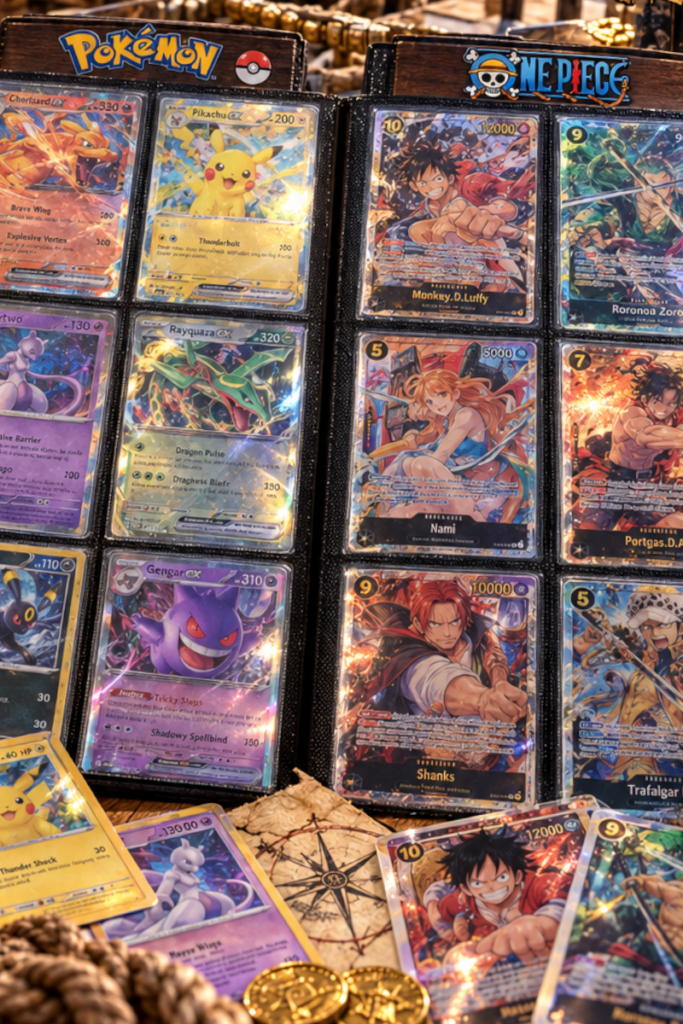
Absolutely. Give each collection its own loose goal if that helps you keep things organized. You don’t need one giant checklist that treats every card the same.
What if I don’t know which printing or variant I want?
Keep it on the wishlist as undecided until you’ve seen the choices. Buying the wrong version because you rushed the search is a pretty frustrating way to spend your card budget.