

Selling a few duplicates can turn an extras box into room for the cards you actually want. It can also turn into photographs, messages, packing supplies, and a stack of tiny jobs you didn’t intend to acquire. The difference is often the size of the project you choose before listing anything.
Start with a small group you’re comfortable letting go. Pick a selling route that fits the effort you’re willing to spend, describe the actual items clearly, and keep enough records to understand the money when the sale is finished. You don’t have to turn your whole collection into inventory.
This is an occasional-seller workflow using U.S. platform and tax references where noted. It doesn’t promise income, establish your tax classification, or replace current platform rules and qualified advice for your circumstances.
Decide which extras are really available
Two copies of a card don’t automatically mean one should be sold. You might want a play copy, a spare for a future binder page, or a card to give a friend. Start with Keep, Trade, Sell, Gift, and Undecided, and let the undecided group remain undecided.
Check that apparent duplicates really match. A different finish, language, stamp, or illustration may matter to your collecting goal. If you sell the version you wanted to keep because both cards had the same character, a tidy extras box won’t feel like much of a win.
Choose a manageable first batch. A few clearly identified cards can teach you whether you enjoy the process without creating dozens of obligations at once. Keep the sale candidates physically separate and recorded so you don’t accidentally offer a card that belongs in your main collection.
Choose the amount of work you want to do
A local shop offer can give you a relatively direct decision: accept the offer for the identified cards or keep them. Individual online listings offer more control over presentation and asking price, but also require more work per order. A well-described small lot can reduce the number of transactions while asking a buyer to want several items together.
Those differences should be part of the comparison. A higher theoretical selling total doesn’t establish a better result after fees, supplies, delivery, unsold items, and your time. You don’t have to assign your spare time a formal hourly rate to decide that twenty separate shipments are more than you want to handle.
The published guide Where to Sell a Few Cards or a Small Lot develops the channel choice. For this first batch, choose one route you understand rather than opening several selling systems at once.
Before listing, check that you meet the chosen platform’s requirements and understand its current policies. This guide doesn’t assume a seller account is already set up or that the same rules apply across countries, account types, or programs.
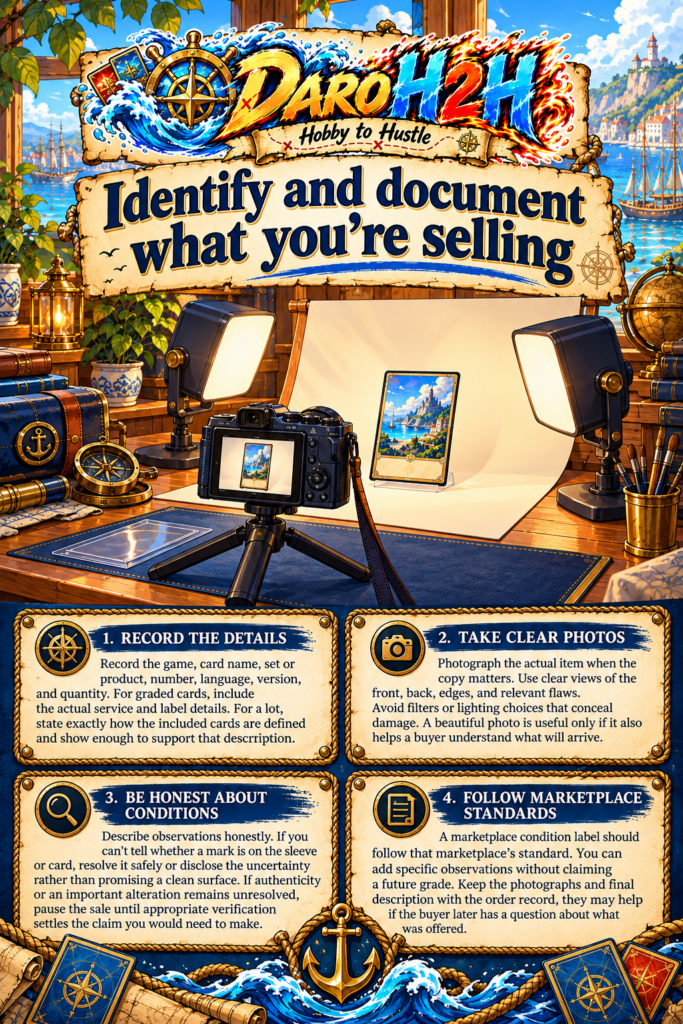
Identify and document what you’re selling
Record the game, card name, set or product, number, language, version, and quantity. For graded cards, include the actual service and label details. For a lot, state exactly how the included cards are defined and show enough to support that description.
Photograph the actual item when the copy matters. Use clear views of the front, back, edges, and relevant flaws. Avoid filters or lighting choices that conceal damage. A beautiful photo is useful only if it also helps a buyer understand what will arrive.
Describe observations honestly. If you can’t tell whether a mark is on the sleeve or card, resolve it safely or disclose the uncertainty rather than promising a clean surface. If authenticity or an important alteration remains unresolved, pause the sale until appropriate verification settles the claim you would need to make.
A marketplace condition label should follow that marketplace’s standard. You can add specific observations without claiming a future grade. Keep the photographs and final description with the order record; they may help if the buyer later has a question about what was offered.
Set an asking approach using matched evidence
Compare the exact printing, language, condition or grade, and quantity with relevant evidence. Separate completed sales from current asks and uncertain outcomes. If the available examples are weak, don’t hide that weakness inside a precise average.
Then decide what matters to you: a particular minimum, a simpler transaction, or willingness to wait. An asking price can be a starting position, but it isn’t a forecast that a buyer will pay it. The same card may remain unsold, and a listing can take attention even before it produces an order.
Check the current fee structure for your actual platform and account. eBay’s selling-fee page is one official starting point. Use the fees that apply to the particular listing, including any optional features you choose; don’t borrow a percentage from an old article or a different seller program.
A proceeds or break-even calculation can help you see what a proposed price leaves after specified costs. Name those costs and the assumptions. The calculation doesn’t tell you whether the item will sell, how long it will take, or whether the return is worth the effort to you.
Walk through a small selling decision
Imagine you have six duplicates you are genuinely ready to release. One is easy to identify and photograph as an individual listing. The others are modest cards that fit a clearly described theme. You compare selling each separately, offering a small lot, and taking the whole group to a local shop.
The individual route might show the highest possible total before costs, but it creates six potential orders. The lot needs a buyer interested in the group. A shop offer may be lower while avoiding photography, packing, and separate messages. These are hypothetical choices, not claims about what any seller or shop will offer.
You choose one individual listing and keep the others for a later decision. That is a perfectly reasonable first batch. You didn’t fail to maximize the box. You matched the work to the part of the hobby you actually wanted to do.
If no route looks worthwhile, trading or keeping the cards remains available. The fact that an item can be sold doesn’t mean it needs to become this week’s task.
Plan packing before the order arrives
Work out how you’ll protect the card and which shipping service can carry the finished package under current rules. The card, sleeve or holder, movement protection, outer packaging, dimensions, weight, and service eligibility have to work together. A method that sounds inexpensive is no bargain if it doesn’t meet the service’s requirements.
For TCGplayer customer orders, consult its current shipping instructions. Don’t substitute instructions for shipping into a different program, such as Direct, or generalize one platform’s requirements to every sale.
Measure and weigh the packed shipment before choosing postage. Check applicable tracking, delivery, and protection requirements directly rather than relying on an old chart. A tracking reference, insurance policy, and platform seller protection are different things; verify what the particular service and transaction actually include.
This guide isn’t a substitute for a validated, item-specific packing demonstration. If you can’t yet prepare a suitable shipment, solve that before offering shipping terms you may not be able to fulfill.
Keep communication and fulfillment tied to the order
When the item sells, confirm the order in the actual platform or agreed selling system. Follow its instructions for the delivery address, payment status, dispatch, and communication. Be cautious about a message that asks you to change the transaction outside the normal process.
Retain the final listing, order details, relevant messages, and shipping reference. Share the buyer’s information only where needed for the transaction. A public photo of a packing session doesn’t need an exposed label or receipt.
If the buyer reports an incorrect, damaged, or missing item, preserve the evidence and use the applicable resolution route promptly. eBay’s policy, for example, sets responsibilities and timelines for eligible transactions. Don’t assume a general “no returns” phrase resolves every kind of claim, and don’t promise an outcome before you understand the issue and rules.
Reconcile what actually happened to the money
Use the real transaction statement and payout, not just the listing price. Some costs may already have been withheld; others may have been paid separately. Choose a clear method so the same fee or shipping label doesn’t get subtracted twice.
Here’s a hypothetical example. A platform sends a $24 payout after its listed deductions, and you separately pay $4 for a shipping label. For this limited cash view, the sale contributes $20 before any other separately paid costs. If that $4 label had already been deducted to arrive at the $24 payout, subtracting it again would be wrong.
That still doesn’t establish profit. The card’s acquisition history and any other relevant costs belong in separate records. If you don’t know what the card originally cost, keep that unknown rather than calling the whole payout a gain. If the order is refunded later, connect the refund to the original transaction without erasing the history.
Update the collection record once the sale is settled. The card is no longer a holding, but its sale record can remain useful. Then decide deliberately whether any money returning to the hobby changes your future spending limit.
Keep the tax question separate
For U.S. sellers, the IRS’s Form 1099-K guidance explains that payment reports and other records have to be considered together; a reported gross payment is not automatically the amount of taxable income. Not receiving a form also doesn’t by itself settle whether income must be reported.
Your pattern of activity, acquisition history, personal-item sales, trades, and missing records can raise questions this workflow cannot answer. Keep the documents and ask a qualified tax professional about your circumstances and tax year. This article does not choose a filing treatment or determine whether you are operating a business.
You can finish a useful first sale without solving every future selling question. Know what left the collection, fulfill the order carefully, retain the record, reconcile the money, and see whether the effort felt worthwhile. The hobby should still be something you look forward to opening the binder for.
Quick questions
Should I sell every duplicate individually?
Only if the likely result and workload fit your goals. A lot, local offer, trade, gift, or decision to keep the cards can be more practical.
Is the payout my profit?
No. First establish which selling costs it includes, then keep acquisition and other relevant records separate. Cash received alone doesn’t settle profit or tax.
What if I don’t know the original purchase cost?
Preserve the missing-history note and any evidence you do have. Don’t invent a cost or automatically use zero; get qualified help if the gap affects a tax question.