
Maybe a Pokémon card caught your eye because it looked like a tiny scene you’d happily hang on a wall. Maybe you found an old binder and want to start again. Or maybe you still have a favorite Pokémon and are curious how many different ways artists have drawn it.
That’s enough of a reason to begin. You don’t need to know the competitive decks, complete the newest expansion, or chase the card everybody is posting. Start with a small collecting idea, learn how to identify the versions you like, and choose a spending boundary before the search gets carried away.
The goal of this guide is a first Pokémon project you can actually picture: a theme, a few identified wants, a sensible first purchase or wait, and a place to keep the cards. The rest of the hobby can unfold from there.
Let the Pokémon or the artwork choose the first direction
A favorite-character collection is a natural start, but you can make it smaller than “every card of this Pokémon.” Try a few favorite illustrations, one page, or one version from each release you deliberately choose. A character with a long card history can provide plenty to explore without becoming an obligation to buy it all.
Artwork can lead the project too. You might notice that the same illustrator keeps appearing on cards you save. You might like quiet outdoor scenes, unusual perspectives, or a particular visual style. That can become a collection even when the featured Pokémon are different.
If you prefer a checklist, choose an expansion and examine what finishing it would actually mean. You may enjoy one numbered sequence, a small subset, or selected cards that belong together. Decide which treatments and promos are included before calling the project complete.
The point is to find something you want to look at. A modest favorite doesn’t need a resale argument, and an expensive popular card doesn’t become your target automatically.
Browse a reference before a marketplace
The official Pokémon TCG database is a useful discovery route. Its support guide explains searches using card name, expansion, rarity, and illustrator. Browse with one small question, such as which artworks of a favorite Pokémon interest you.
Save a few candidates without trying to rank everything by price. A short discovery list lets you compare the art calmly instead of buying whichever listing appeared first. You can later move the strongest candidates into an exact wishlist.
Keep physical cards separate from images you’ve seen in an app. A familiar character or illustration is a clue to research, not proof that a matching physical release exists with the same identifier. Check the actual physical card information before shopping.
Learn the identity details that prevent wrong purchases
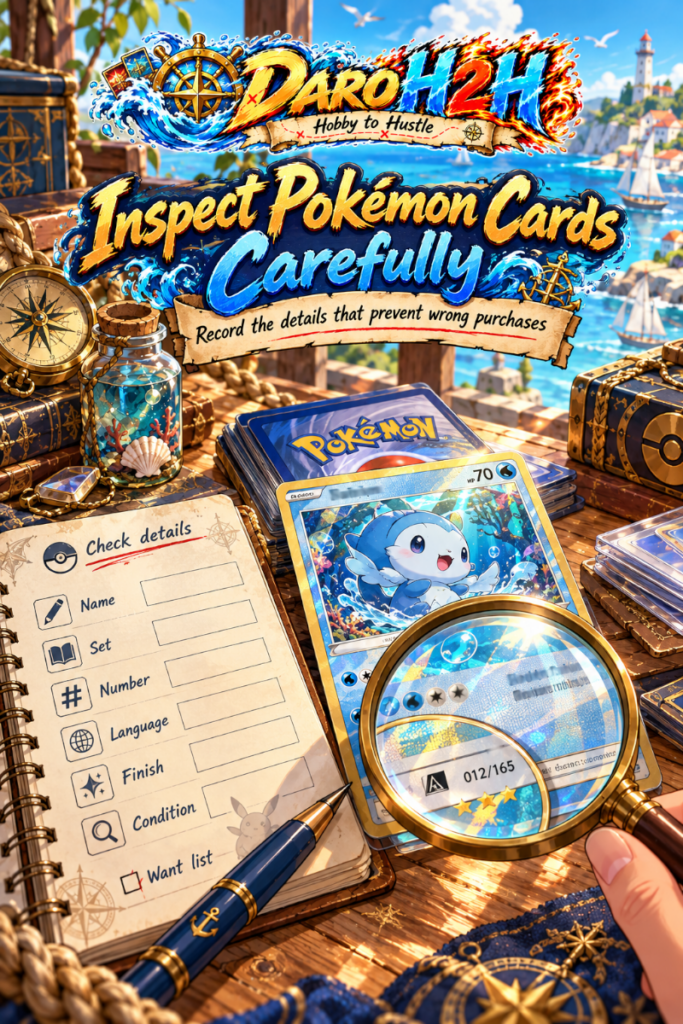
For each wanted card, record the exact name, expansion or promo family, collector number, language, and relevant artwork or finish. Add the illustrator if that’s part of your theme. Keep condition and raw-versus-graded preferences alongside the identity rather than hoping the seller guesses what you meant.
Don’t assume one card layout covers all eras. Older and newer releases can present identifying details differently. Use the reference for the actual release instead of borrowing a current rarity chart for a card from years earlier.
A bounded example makes this clearer. The official Scarlet & Violet—151 checklist lists Pikachu at both 025 and 173. “Pikachu from 151” therefore leaves an important question unanswered. Choosing the specific number is part of choosing the card, even before language, treatment, or condition enters the discussion.
You don’t need to memorize that example. You need the habit it illustrates: write enough detail that someone else could find the version you would be happy to receive. If you haven’t resolved it yet, keep the want marked uncertain.
Separate rarity from the version you enjoy
Rarity labels help describe the release. Foil treatment describes another aspect of the physical card. Promotional status can point to a different distribution route. Those details can overlap without becoming one universal ladder of desirability.
Pokémon’s Scarlet & Violet announcement is a useful era-specific example because it explains rarity changes and parallel foil separately. It doesn’t serve as a chart for every past or future Pokémon card.
For your first project, decide whether multiple treatments add something you actually enjoy. If you love the illustration and one copy is enough, you can stop there. If the difference in finish is the project, keep each verified version explicit. Neither approach is more legitimate than the other.
Avoid using the rarity name as a price forecast. If money matters to a specific purchase, compare the exact printing and condition with relevant current evidence. If you’re choosing which artwork makes you happiest, let that question stay about the art.
Choose a first goal with a recognizable finish line
Imagine building one page of favorite Pikachu artwork. You could choose a few candidates across releases, decide on one language, and leave the final slots open while you discover what you like. The project doesn’t have to include every promo or every shiny version of the chosen cards.
Or imagine a 151 project. You might use the official checklist to define a smaller, explicit selection rather than announcing a master set before you know what that would include. The checklist helps you understand the release; you still decide the boundary of your collection.
Write the rule down in ordinary language. “One copy of each of these chosen artworks” is clear. “Everything important” isn’t, because importance tends to expand every time you watch another opening video.
You can change the boundary later. Starting small gives you a chance to find out whether you enjoy filling a set, arranging artwork, hunting a character, or simply collecting a few favorites.
Put packs and singles in their proper places
If you want one exact card, compare buying the single. You can see which printing is offered and investigate its condition. Opening more packs is a different experience, with a different kind of uncertainty.
Pokémon Support’s booster guidance says the wrapper image doesn’t describe the individual pack’s contents and doesn’t guarantee a particular Pokémon. Choose packs because opening them sounds enjoyable within your limit, not because the packaging appears to promise the card you’re chasing.
For a box or bundle, read the exact contents and distinguish specified extras from random packs. A promo you want may be fixed in one named product, while the booster pulls remain unknown. Similar product names and different editions deserve separate checks.
A first purchase doesn’t need to be a large sealed box. One well-chosen single can tell you a lot about whether the physical artwork, finish, and collecting project appeal to you. Buying nothing while you refine the plan is equally valid.
Make the budget include getting the cards home
Choose a limit that works with your real finances and define the time period. Include shipping and the supplies you actually need if they’re part of the same project. Don’t use a hoped-for future sale to make today’s purchase look affordable.
Suppose, hypothetically, you have $40 set aside for a small start. You don’t need to spend it all on cards and discover afterward that every purchase ships separately. Compare the full cost, consider whether combining sensible purchases helps, and leave room for suitable protection. The exact number isn’t advice; the order of decisions is what matters.
Give the wishlist priorities. One card can be a next target, another a someday target, and another simply interesting. That makes it easier to skip an exciting release that doesn’t serve your current collection.
Protect the first cards without overbuying gear
Choose sleeves, holders, and storage based on actual fit. A familiar brand name or the word “standard” doesn’t answer every compatibility question, particularly when you combine an inner sleeve, outer sleeve, binder pocket, or rigid holder.
The published sleeves and holders guide explains that decision in more detail. For a small beginning, use a manageable setup you can keep organized. Don’t force a card into a tight pocket or pack a box so full that retrieving one card becomes a struggle.
Record the cards you own and where they live. A brief note is enough at first if it identifies the versions accurately. Update the wishlist when a purchase arrives and is settled so you don’t keep shopping for a slot you’ve already filled.
You can arrange a favorites page for visual enjoyment rather than strict numbering. A set binder may need a different system. Let the storage serve the collecting idea.
Playing and digital apps are optional branches
If you want to play physically, use current official rules and the event locator, then confirm the individual event’s requirements. A card’s appeal as a collectible and its suitability for a current format are separate questions.
Pokémon TCG Live has its own support area. Pokémon TCG Pocket has separate help, and its gameplay FAQ says its rules differ from the physical TCG. Don’t assume physical holdings, Live cards, and Pocket cards form one transferable collection.
If you only want physical artwork in a binder, you can leave those branches alone. Collecting doesn’t require an account in every app or an ambition to enter tournaments.
A first week that leaves room for fun
Begin by choosing one theme and saving a few references. Identify the exact version of the strongest candidate. Set your limit, compare an understandable offer, and decide whether to buy or wait. If you already own suitable cards, arrange them and see what the project is missing before adding more.
At the end of the week, you don’t need a completed collection. You want a clearer sense of what you enjoy and a next step you can explain. The hobby is large enough to keep offering discoveries. You don’t have to catch every one of them in the same shopping cart.

Quick questions
Do I have to complete a set to collect Pokémon?
No. Character pages, illustrator collections, and small groups of favorite art are all workable projects. Completion is one kind of goal, not an entry requirement.
Is a different language a good substitute?
It can be if it fits your goal. Decide deliberately and verify the printing. Don’t treat languages as interchangeable for collecting or organized play without checking the relevant details.
Should I begin with graded cards?
Only if that format serves your goal and budget. A raw binder collection can be enjoyable without grading submissions or a display of holders.
What is the most useful thing to learn first?
How to identify the exact card you want. It improves your wishlist, comparisons, trades, and collection record without requiring you to learn the whole game at once.